2024.12 Comprehensive Housing Price Index
Note
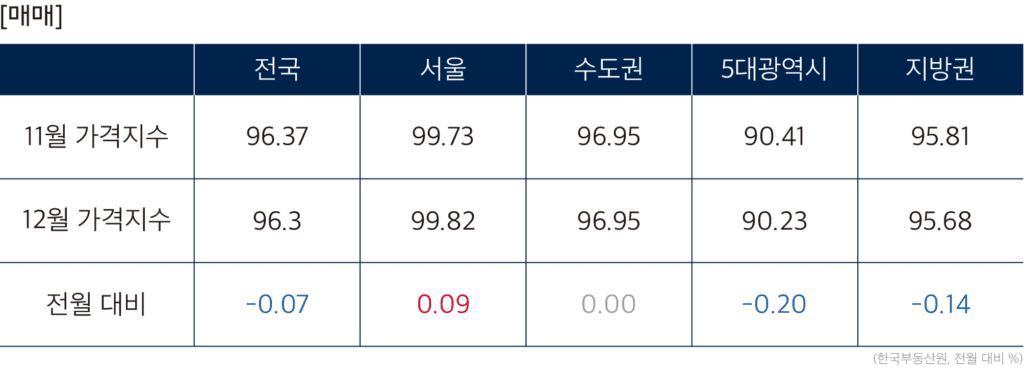
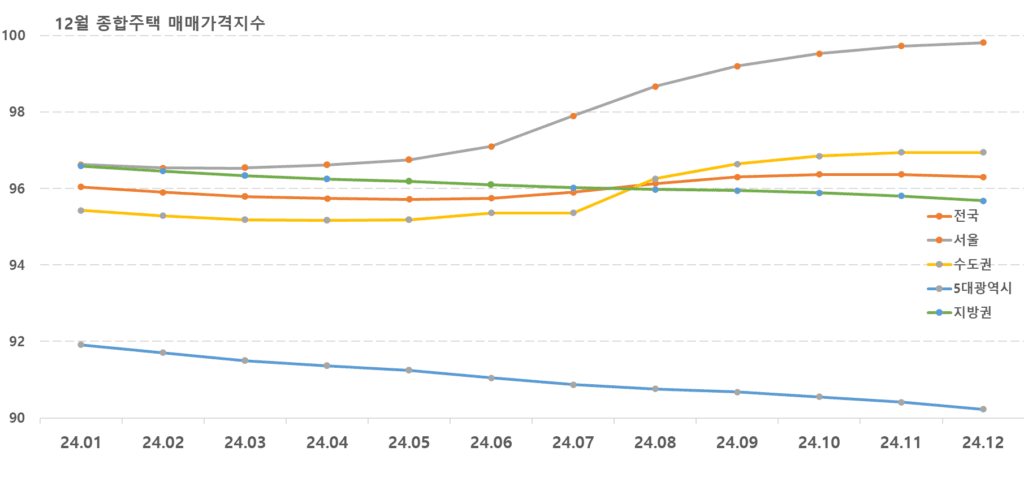
The comprehensive housing transaction price index rose slightly in Seoul, and ended with a flat or falling trend in the metropolitan area, five major cities, and local areas. The number of rising areas (87 → 59) decreased significantly compared to the previous month, the number of flat areas (3 → 3) did not change, and the number of falling areas (88 → 116) increased significantly, ending with a nationwide decline. In Seoul, the upward trend continued in some preferred complexes, but other complexes showed a wait-and-see attitude due to loan regulations and seasonal off-season, and the increase was reduced. In Incheon, the decline expanded mainly in Jung-gu and Gyeyang-gu, which are affected by the amount of new construction, and Gyeonggi showed a mixed trend by region, turning from an increase to a flat trend.
In Seoul, the Gangbuk (0.08%) side led the increase, mainly in small and medium-sized complexes in Dowon-dong and Singye-dong in Yongsan-gu (0.15%), Sindang-dong and Jungnim-dong in Jung-gu (0.15%), and major complexes in Ahyeon-dong and Yeomri-dong in Mapo-gu (0.15%). In Gangnam (0.09%) side, the increase was mainly in major complexes in Gaepo-dong and Nonhyeon-dong in Gangnam-gu (0.24%), Banpo-dong and Jamwon-dong in Seocho-gu (0.21%) under reconstruction, and Dangsan-dong and Singil-dong in Yeongdeungpo-gu (0.16%). In Incheon (-0.27%), the decline was large in Jung-gu (-0.39), Gyeyang-gu (-0.38), and Namdong-gu (-0.33), and in Gyeonggi-do (0.00%), there was an increase in Anyang-si (0.33%) and Gwacheon-si (0.28%), but the decline was large in Pyeongtaek-si (-.022%) and Icheon-si (-0.17). It appears that the transaction volume has fallen significantly nationwide and the piling up of properties is changing from an upward trend to a downward trend.
Note
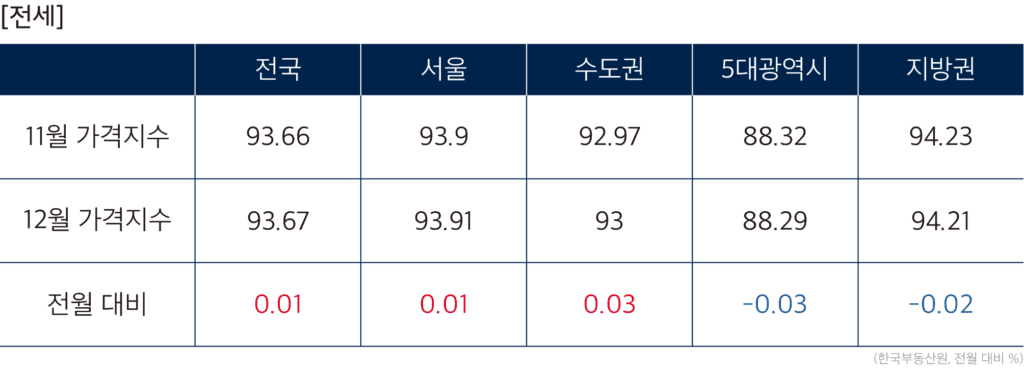
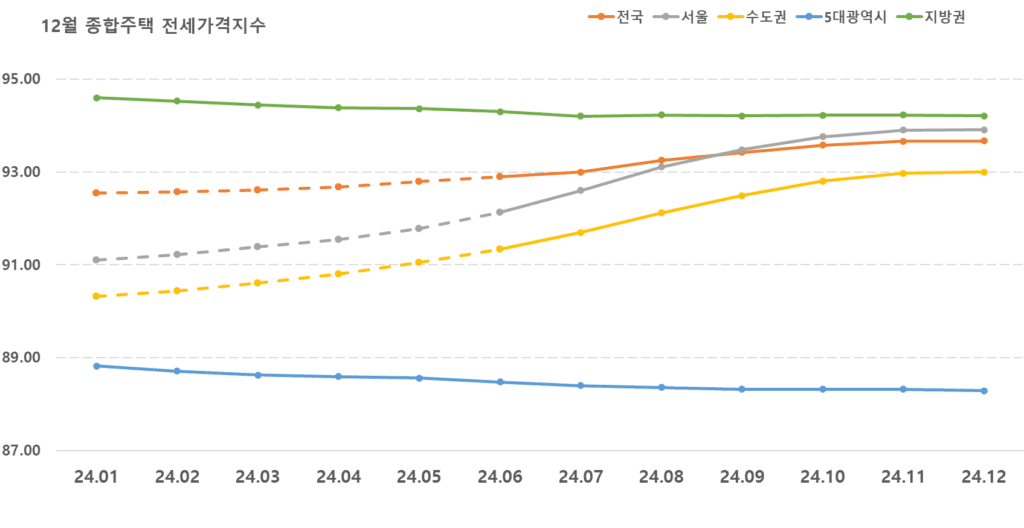
The jeonse price index ended its continuous rise since June of last year and ended in a nationwide flat trend. The number of areas that increased (124 → 101) compared to the previous month decreased significantly, the number of areas that remained flat (4 → 2) decreased slightly, and the number of areas that decreased (50 → 75) increased significantly. The Seoul metropolitan area is showing an upward trend centered on preferred complexes with good living conditions, but the jeonse price has been adjusted downward due to the impact of the number of occupants in some areas and the burden of loan interest, and the increase in Seoul as a whole has been reduced. Incheon has turned from an upward trend to a downward trend, with a decline centered on Jung-gu and Seo-gu due to the impact of the number of occupants, and Gyeonggi has shown an upward trend centered on Hwaseong-si and Yeongtong-gu in Suwon-si.
In Seoul, the northern part of the river (0.04%) led the rise, centered on complexes near subway stations and small and medium-sized complexes in Nowon-gu (0.17%) and Jungnang-gu (0.16%), while in Gangnam (0.00%), the rise was centered on the school districts of Banpo-dong and Jamwon-dong in Seocho-gu (0.20%) and major complexes in Sinsa-dong and Gaepo-dong in Gangnam-gu (0.15%), but due to the influence of the amount of housing available for occupancy in large complexes in Gangdong-gu (-0.21%), the decline was centered on large complexes in Sincheon-dong and Munjeong-dong in Songpa-gu (-0.15%), turning the rise into a flat trend. In the metropolitan area, Incheon Metropolitan City (-0.08%) showed a large decline in Jung-gu (-0.38%) and Seo-gu (-0.36%) due to the influence of the amount of new housing, and the increase stopped and turned downward.
Note
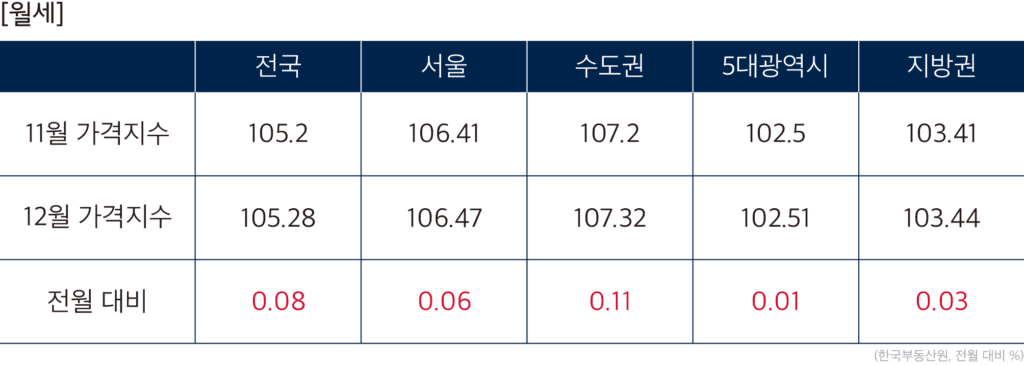
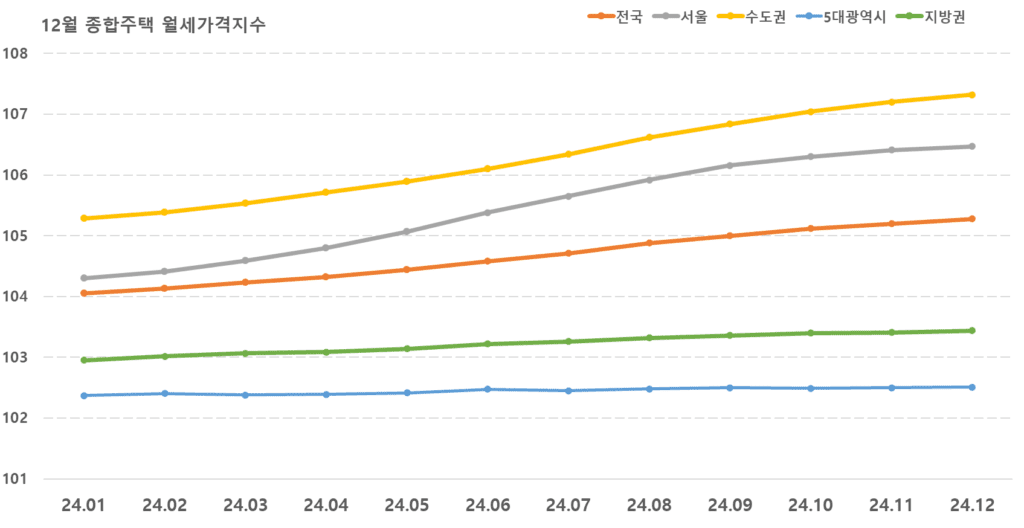
The monthly rent price index increased by 0.08%, the same as the previous month. In Seoul, the monthly rent demand continued in preferred complexes with good residential conditions such as school districts and small and medium-sized complexes, and the overall upward trend continued in Seoul. In Incheon, the increase was led by small and medium-sized complexes in Michuhol-gu and major large-scale complexes in Bupyeong-gu, and in Gyeonggi, the increase was led by small-sized complexes in Ilsandong-gu, Goyang, and areas near stations in Paju-si. Among the five metropolitan cities, the decline was led by Nam-gu and Jung-gu in Daegu, but the increase was led by Buk-gu and Ulju-gun in Ulsan, maintaining the increase. In other regions, Jeonnam and Chungnam changed from declines to increases, and Sejong and Gyeongnam continued the upward trend with the increase expanding.
Recently, the transaction volume has fallen sharply due to the gap between the selling and buying prices, and further increases in the selling price appear to be limited. However, as rental demand, especially monthly rent demand, continues to increase, the monthly rent price index is expected to continue to rise.