<Buying and Selling
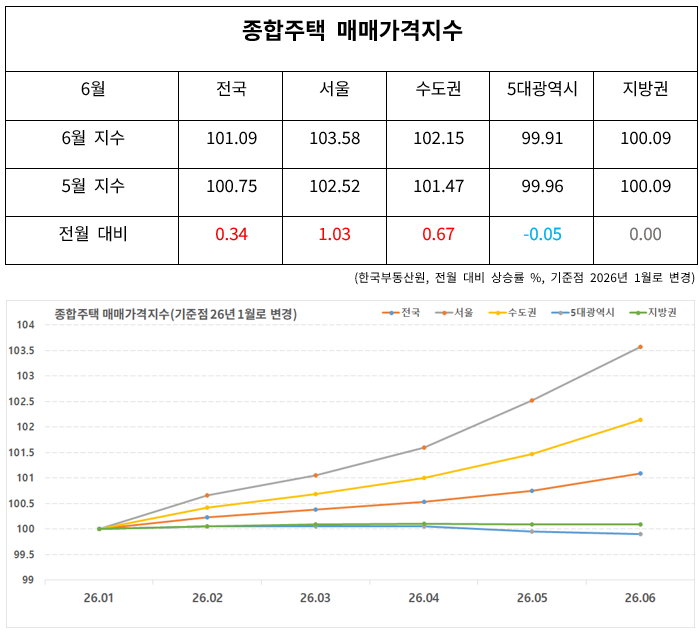
Nationwide housing in June 2026 announced by the Korea Real Estate Institute The sales price index rose 0.341 TP3T compared to the previous month....continued a moderate upward trend. While the metropolitan area rose by 0.671 TP3T, the provinces rose by only 0.011 TP3T, indicating that the gap between regions is widening further.
Seoul is 1.03% Rising and recording the highest growth rate in the nation, Gyeonggi-do 0.59%, Incheon 0.11%The entire metropolitan area showed strength. In the provinces, Ulsan (0.31%), Jeonbuk(0.19%), Jeonnam(0.16%), Chungbuk (0.10%While ) continued its upward trend, Gwangju(-0.31%), Sejong(-0.19%), Jeju(-0.17%), daegu(-0.08%), Gyeongbuk (-0.06%), busan(-0.04%) fell.
In Seoul, the upward trend has spread not only to preferred areas such as Gangnam and Songpa, but also to regions with proximity to workplaces and expectations for redevelopment, including Jongno (1.391 TP3T), Guro (1.311 TP3T), Gwangjin (1.311 TP3T), Seongdong (1.231 TP3T), and Yeongdeungpo (1.101 TP3T). This demonstrates that the interplay of real demand and limited supply is driving price increases centered on the Seoul metropolitan area.
<Jeonse
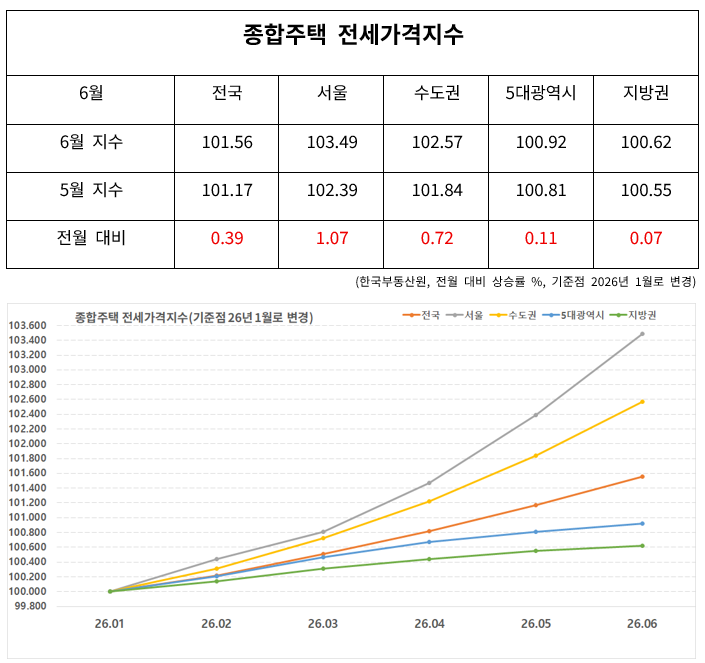
Nationwide The Jeonse price index rose 0.391 TP3T compared to the previous month....and showed a more robust trend than the sales market. The metropolitan area 0.72%, fat is 0.08% As it rose, the strong Jeonse trend centered on the metropolitan area continued. Seoul 1.07% Rising, it recorded the highest growth rate in the country, and Gyeonggi 0.58%, Incheon 0.29%It also showed a steady upward trend.
In the provinces, Ulsan (0.45%), Sejong(0.31%), busan(0.21%), Jeonbuk(0.21%), Daejeon(0.13%While ) etc. rose, Gwangju(-0.24%), Jeju(-0.17%), Gangwon(-0.02%), Gyeongbuk (-0.01%...showed weakness. In Seoul, the increase was significant centered around large complexes and areas near subway stations, including Seongdong-gu (2.081 TP3T), Nowon-gu (1.781 TP3T), Dobong-gu (1.561 TP3T), Songpa-gu (1.531 TP3T), and Jongno-gu (1.501 TP3T). Similarly, in Gyeonggi Province, Jeonse demand remained steady in areas where real demand is concentrated, such as Hwaseong Dongtan, Gwangmyeong, and Guri. With limited Jeonse supply and persistent demand for move-in, the upward trend centered on the Seoul metropolitan area appears to be continuing.
<Monthly Rent >
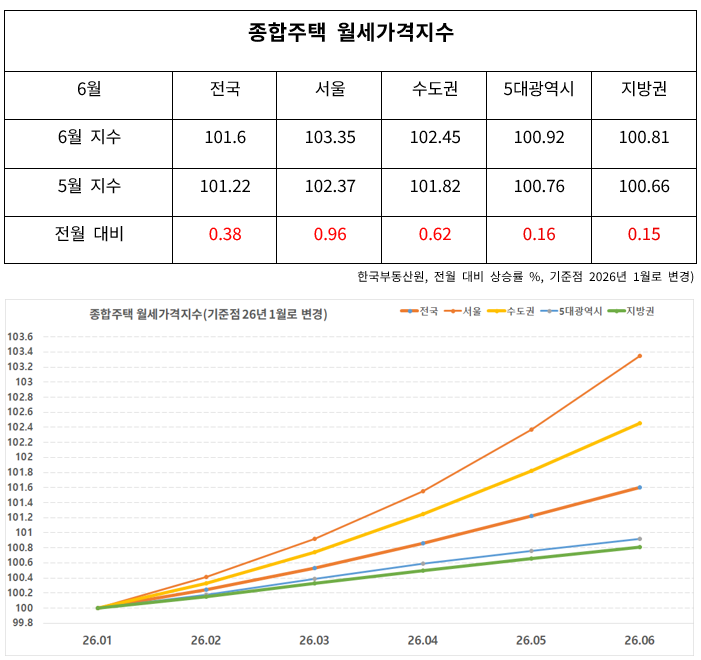
Nationwide The monthly rent price index rose 0.381 TP3T compared to the previous month....and recorded the same rate of increase as the Jeonse market. The metropolitan area 0.62%, fat is 0.15% With the rise, the monthly rent market is also showing a trend where the metropolitan area is leading the market. Seoul is 0.96%, game 0.49%, Incheon 0.29% It rose, and in the provinces, Ulsan (0.44%), Jeonbuk(0.23%), Jeonnam(0.22%), Sejong(0.22%), busan(0.21%), Gyeongnam (0.18%) etc. showed a relatively high growth rate. On the other hand, Jeju(-0.14%) continued its downward trend.
In Seoul, Seongdong-gu (1.771 TP3T), Jongno-gu (1.461 TP3T), Dobong-gu (1.191 TP3T), Gangbuk-gu (1.151 TP3T), and Mapo-gu (1.131 TP3T) recorded high growth rates, clearly demonstrating a preference for monthly rent in areas with excellent living infrastructure and proximity to workplaces. As actual demand for monthly rent increases due to the burden of securing Jeonse funds and the impact of interest rates, the monthly rent market is maintaining a stable upward trend, and this trend is highly likely to continue for the time being, particularly in the Seoul metropolitan area.
<Comprehensive Analysis>

In June 2026, the housing market continued its recovery trend, with the sales, Jeonse, and monthly rent price indices all rising. However, the upward trend became more distinctly concentrated in the metropolitan area, particularly Seoul, while provincial regions showed a mix of stable and declining areas. The fact that the Jeonse and monthly rent price indices (0.381 TP3T each) recorded higher growth rates than the sales price index (0.341 TP3T) indicates that the strength of the rental market, driven by actual demand, is continuing.
Looking ahead, the market is highly likely to maintain relative strength centered on preferred areas in Seoul and the metropolitan area, despite the influence of interest rates and supply policies, while provincial regions are expected to show differentiated trends depending on local supply and demand conditions.