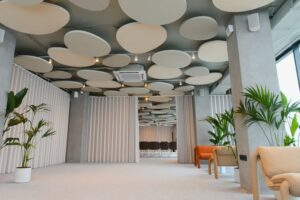
Knowledge Industry Centers were called apartment-type factories until 2009, but were renamed as Knowledge Industry Centers after a revision to the law. They refer to building-type factories located in downtown areas, new cities, or industrial areas.
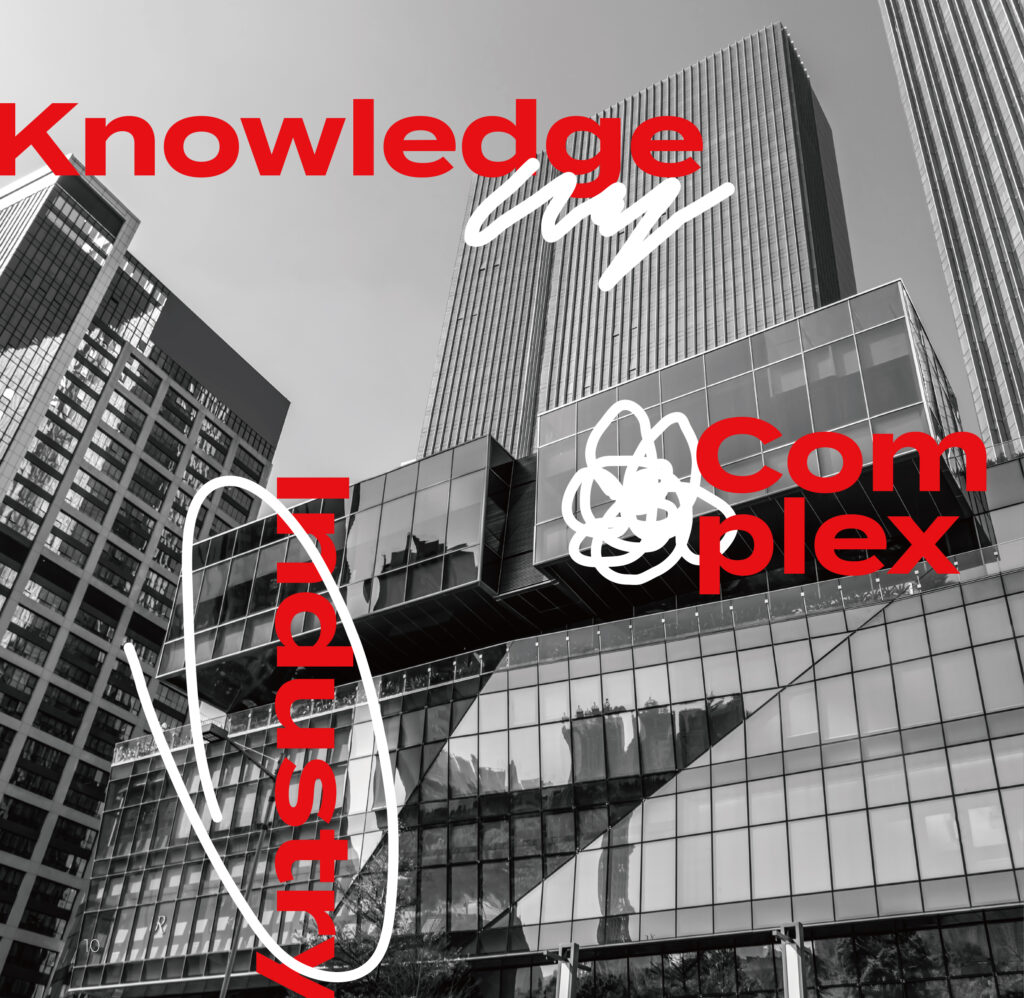
A knowledge industry center is a multi-story building with three or more floors that can house manufacturing facilities, knowledge industry, information and communication industry facilities, and support facilities in one building. The intended use of the building, i.e. the facilities that can be occupied by floor and room (intended use), is stipulated by law.
The number of knowledge industry centers has increased rapidly since 2018. One of the reasons is that while factories can originally be built in industrial zones, knowledge industry centers can be located not only in industrial zones but also in type 3 general residential areas or semi-residential areas, so oversupply began in the metropolitan area where it was difficult to install factory facilities. Until 2021, various regulations on housing were strict, so investment demand flowed into knowledge industry centers where there were relatively few regulations. However, after 2022, housing-related regulations were eased, and the transaction amount and number of transactions plummeted due to the effects of a decrease in profitability due to a surge in interest rates, the maintenance of high sales prices due to rising construction costs, an increase in vacancy rates due to oversupply, and an increase in PF bad debt.
Investment in the knowledge industry center should be approached with the fundamental idea of investing in real estate.
You should directly examine the location, current status, vacancy rate in the surrounding area, rental level, and number of properties waiting for construction, and then invest. Factors considered in real estate investment include rental income, yield, and capital gains when disposing. However, due to the imbalance between supply and demand, the vacancy rate increases, increasing the interest burden due to long-term vacancy. If you lease out properties at low rents to resolve this, the rate of return will decrease. In addition, if a waiting list of properties is supplied to the market in the future, it will be difficult to find even low-cost tenants.
If the selling price is high, the rent is low, and it is difficult to find tenants, even the exit strategy will not be easy, despite the profit from the sale. Nevertheless, if you want to invest, it is recommended to invest in the support facilities (neighborhood living facilities) in the knowledge industry centers of Gwangjin, Yeongdeungpo, and Geumcheon in Seoul rather than the metropolitan area or the provinces.