The Seoul office market is regaining its vitality. While key indicators such as vacancy rates, rents, and yields are generally stable, distinct characteristics are emerging by region.
We examine current market trends based on data from the first quarter of 2025 for Seoul's major business districts: Gangnam, Yeouido, and downtown.
Gangnam has the highest return on investment.
The average return on investment across Seoul is 1.951 tpa3t. Gangnam, however, had the highest return at 2.581 tpa3t. The income return is 1.651 tpa3t, and the return on capital is 0.931 tpa3t, forming a balanced pattern.
Yeouido and Mapo are showing a stable trend, recording 1.74%. Demand centered on the financial sector and the long-established concentration of companies are driving returns.
Although the city center is somewhat low at 1.66%, its symbolic value and location as a central business district (CBD) are still valid.
Downtown vacancy rates are somewhat high but stabilizing.
The vacancy rate was highest in the city center at 7.5%. However, this can be seen as a short-term adjustment phase due to the impact of large prime office buildings supplied in recent years.
In particular, the proportion of newly built, high-end offices is increasing, and some older buildings are losing their competitiveness, contributing to rising vacancy rates. The key point is the comparison with the past.
Until 2020, vacancy rates of over 10% were common in downtown areas, but now, despite increased supply, vacancy rates are actually decreasing, indicating a stronger market for absorption.
Gangnam is maintaining a relatively stable level at 6.5%, while Yeouido and Mapo are maintaining a relatively stable level at 4.9%.
Downtown rents are the highest… Location premium still applies
As of the first quarter of 2025, rents in downtown Seoul were the highest among major districts.
Downtown: 300,000 won/㎡ Gangnam: 261,000 won/㎡ Yeouido/Mapo: 197,000 won/㎡
The city center is where key administrative, financial, and media institutions are concentrated, including Gwanghwamun, Jongno, and Euljiro, and the high rents are a reflection of the location premium.
While rents in high-end new office buildings are pushing up the overall average, some older buildings are contributing to rising vacancy rates.
This has led to a steady demand for remodeling and renewal, and the possibility of reorganization within the market is also being discussed.
Approach should be based on regional characteristics
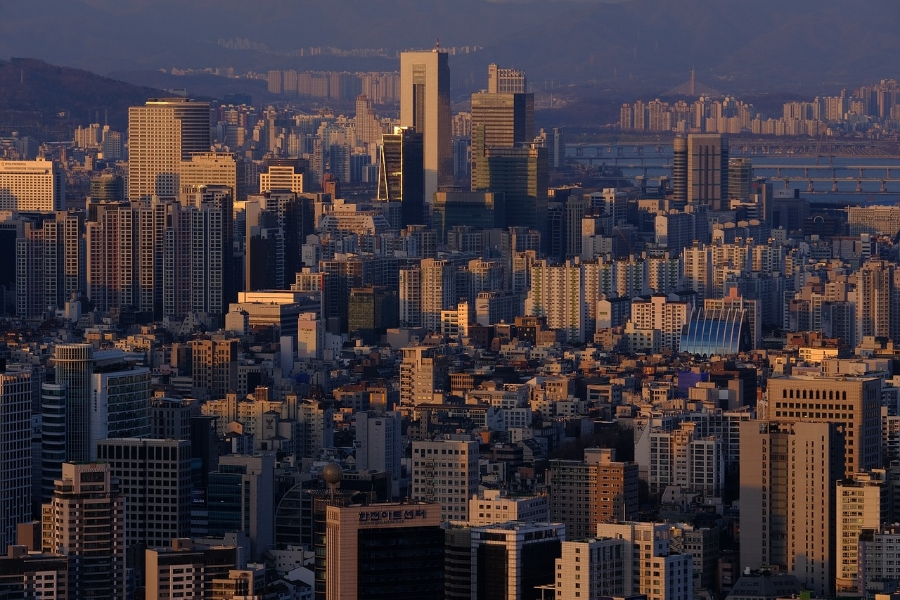 <Panorama of Gangnam Business District>
The Seoul office market has distinct regional characteristics, with each region possessing different strengths. Despite high rents, Gangnam boasts both strong yields and strong demand, making it a prime investment destination.
Yeouido and Mapo are attracting attention as balanced investment destinations based on relatively reasonable rents, stable returns, and low vacancy rates. The city center still has long-term value, including remodeling potential and symbolic value, despite lower vacancy rates compared to the past.
Overall, the Seoul office market is showing a healthy trend. While a differentiated approach is necessary for each region, the strong demand base and well-absorbed supply provide a positive medium- to long-term investment environment.
Market insiders advise that "investment strategies should be developed by considering not only simple returns but also the locational value and demand structure of the region."
Source: Ministry of Land, Infrastructure and Transport, "Commercial Real Estate Market Trends for the First Quarter of 2025"
Franchise & Brokerage Employment Inquiries http://www.remaxkorea.co.kr
Real estate listing search https://www.remax.co.kr |