The survival formula for commercial real estate, as demonstrated by Euljiro and Seongsu-dong.

The shadow of a skyscraper and the night of Euljiro
The Seoul Central Business District (CBD), where my company, Remax Meister, is located, is the front line of South Korea's capital. Outside, a forest of intelligent buildings, equipped with cutting-edge HVAC systems and impeccable security, forms a forest. In terms of hardware alone, these are impeccable, first-class assets.
 But as the sun sets and work hours draw to a close, a curious paradox unfolds. Instead of heading to the main street buildings with their sleek marble lobbies, people head down narrow, dark alleys barely wide enough for two people to pass. They willingly wait in line to reach those dilapidated, four-story buildings without elevators, and with barely a proper sign.
We call this place "Euljiro," while the younger generation calls it "Hipjiro." This phenomenon poses a poignant question for the real estate market: "Why are even ground-floor commercial spaces with prime locations and facilities groaning in vacancy, while that shabby, run-down alleyway bustles with people even on weeknights?"
We need to look beyond the simple "economic downturn" and "high interest rates" to the changing nature of space consumption as the cause of vacancy. It's time to acknowledge this shift.
''Location' should go to 'Destination'

The old adage of "location first, location second," which has long been a key to real estate success, still holds true. However, it's not necessarily absolute in this day and age. In the past, consumers chose places that were highly visible and easily accessible—this is the power of location. However, modern consumers, armed with search engines and social media, are different. They're willing to go to the trouble of navigating through labyrinthine alleyways, even with navigation systems, if they find compelling content.
Euljiro is a testament to the power of "location" when it reaches its "destination." The immense consumer power that resides in the CBD, including Euljiro, and attracts and moves to this area, whether for business, pleasure, or their own reasons, is itself a testament to the still-valid power of "location."
But these consumers aren't simply heading to a "site" to drink coffee or get drunk on a glass of soju. They're heading to a "destination" for the "experience of exploration," where they discover hidden shops, like treasures, and the rustic ambiance of an old print shop alley. For them, inconvenience isn't a cost to be endured; it's part of the "hip" experience.
Nowadays, it's difficult to fill vacant spaces simply by claiming they're near a subway station. If you can't offer customers a compelling reason to visit your building or store, you're doomed to be completely ignored.
Filling in hardware deficiencies with software
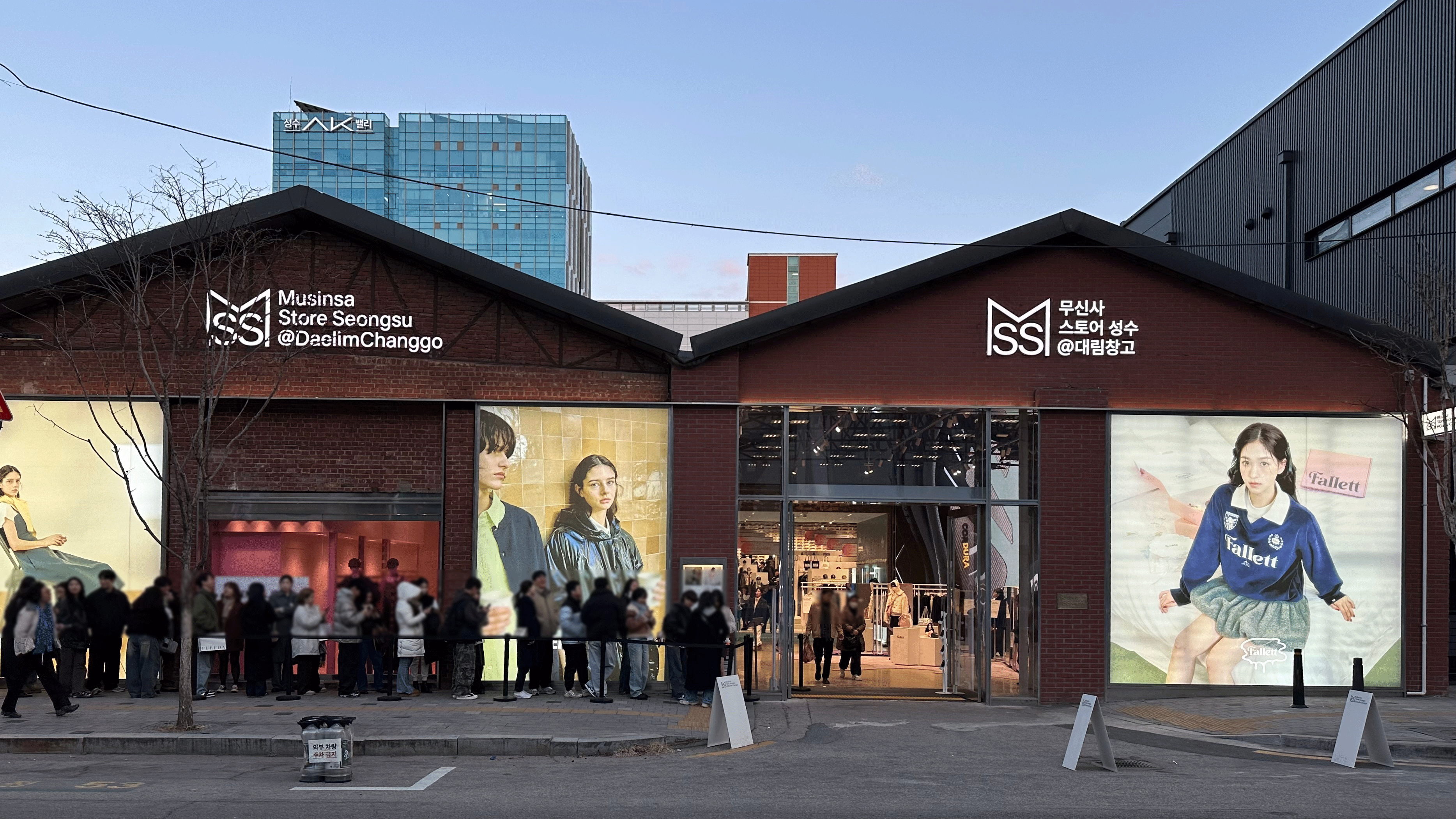
This logic becomes even more compelling when you look a little further into Seongsu-dong. The red brick factories, once filled with the noise of machinery and the smell of shoe polish, have now become the most sophisticated venues, where global luxury brands are competing to open pop-up stores.
What's noteworthy is that they didn't tear down the building and rebuild it. They preserved the old bricks and rough-hewn structure, filling it with a unique brand story and content. The physical "weariness" combined with the software (planning) was reborn as a one-of-a-kind "vintage charm."
The examples of Euljiro and Seongsu-dong provide a clear signal. We are entering an era where excuses like "the building is old" or "there's no foot traffic" for unleased buildings will no longer be valid. What matters more will not be the building's age, but the color and narrative it imbues within the space.
Beyond space broker, to ‘space planner’
'There is no such thing as vacancy. There is only empty space.'
 The role of real estate professionals must now evolve. They must move beyond simply connecting landlords and tenants, into the realm of "curation," breathing life into dormant spaces. They must become "space planners," considering what content will revitalize a building and who will attract it to transform it into a destination.
This is why I spend every day observing the old alleyways amidst the dazzling skyscrapers of Seoul's central business district. It's here that we contemplate space, contemplate planning, and shape the future of real estate.
There's no need to fear blank space. Empty space means you can still paint anything. To imbue that blank canvas with a compelling story—that's the essence of the true karma required of us now.