Korean Commercial Real Estate: Where Crisis and Opportunity Intersect
The Korean economy faces two structural pressures as of 2025. On the fiscal side, soaring national debt and entrenched fiscal deficits are exacerbating financial market instability. On the industrial side, tightening regulations in the construction industry are disrupting the supply cycle by causing project delays and rising costs.
The ripple effects of expansionary fiscal policy
National debt is projected to reach 1,400 trillion won in 2026 and 1,789 trillion won in 2029, or 581 trillion tpy of GDP. However, the pace of growth itself is a variable that could shake market confidence. At the same time, household debt has already surpassed 2,000 trillion won, reaching around 1,001 trillion tpy of GDP, the highest in the world. According to the Bank of Korea's "Economic Outlook Report for August 2025," this debt burden could lead to a contraction in consumption and the rental market, increasing the risk of vacancy in commercial real estate.
The government maintains an annual fiscal deficit of 41 trillion tpy as a percentage of GDP. Expanding government bond issuance creates upward pressure on long-term interest rates, which is then transferred to volatility in commercial lending rates. However, the Ministry of Strategy and Finance (MOSF) announced in its 2025-2029 National Fiscal Management Plan its intention to establish a sustainable fiscal foundation by normalizing fiscal soundness and improving debt quality.
While short-term welfare spending and expansion of local currencies have limitations in addressing structural issues, they are having a short-term effect on consumer spending. Furthermore, mandatory pension and welfare spending, while limiting fiscal flexibility, may also contribute to a stable investment environment in the long term by expanding the social safety net.
Three sets of regulations and restrictions on the construction industry
The "Yellow Envelope Law" (Partial Amendment to the Trade Union and Labor Relations Adjustment Act) limits claims for damages, weakening the deterrence of strikes and increasing the risk of construction delays. Furthermore, it could directly impact small and medium-sized construction companies with weak financial standing, causing a surge in financial costs.
While the proposed amendments to the Commercial Act purport to improve corporate governance, including the introduction of a multiple representative action system and separate election of auditors, they also pose the burden of delays in decision-making and increased litigation risk for companies. However, the increased transparency of corporate governance is also expected to have a positive impact, boosting the trust of foreign investors.
The Serious Disaster Punishment Act increases the criminal risk of business managers and increases safety management costs, but it also has the potential to raise safety standards across the industry and strengthen ESG competitiveness.
In summary, these three regulations are leading to construction delays, increased costs, and a decline in investment, increasing the risk of bankruptcy for small and medium-sized construction companies. However, they also represent a turning point in industrial restructuring, potentially leading to improved market conditions in the long term.
Economic Environment Outlook 2025-2026
Over the next two years, the Korean economy is expected to face a mix of uncertainty and opportunity across three axes: interest rates, taxation, and investment. The Bank of Korea has determined that despite the base rate cut, government bond yields are under upward pressure due to increased government bond issuance and fiscal instability. This, in turn, is increasing the volatility of commercial lending rates.
The tax shortfall is leading to debate over reforms to corporate, property, and transfer taxes. According to data from the Ministry of Strategy and Finance, these tax reforms could increase the burden on businesses and the wealthy. However, fiscal expansion will also provide liquidity to the social overhead capital (SOC) and infrastructure sectors, and areas where government budgets are concentrated, such as the Great Train Express (GTX), industrial complexes, and R&D clusters, are expected to offer new growth opportunities.
Impact on the Commercial Real Estate Market
High interest rates and rising financial costs are discouraging leveraged investments, leading to a decline in transaction volume. The Korea Real Estate Board's "Commercial Real Estate Lease Market Trends" report points out that the recent decline in transaction volume is the result of a combination of factors, including interest rate burdens, weakening corporate purchase demand, and a growing preference for leasing.
The rental market is also unstable. Household debt of 2,000 trillion won and a decline in consumption are worsening sales for small businesses, leading to increased vacancy risks. While small business support policies and local currencies are providing a short-term buffer, they are not a fundamental solution.
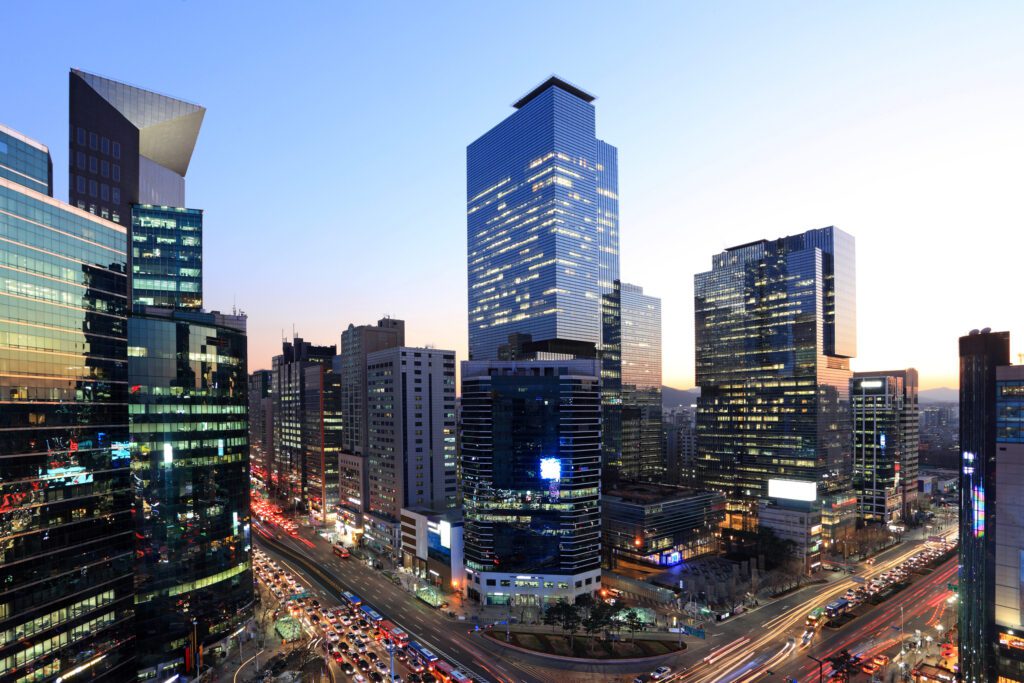
However, not all markets are shrinking. In areas where government funding is concentrated, asset values can be revalued. Areas linked to the GTX, data centers, and AI/R&D special zones are emerging as new growth engines even amidst the recession.
The reality of industrial structure
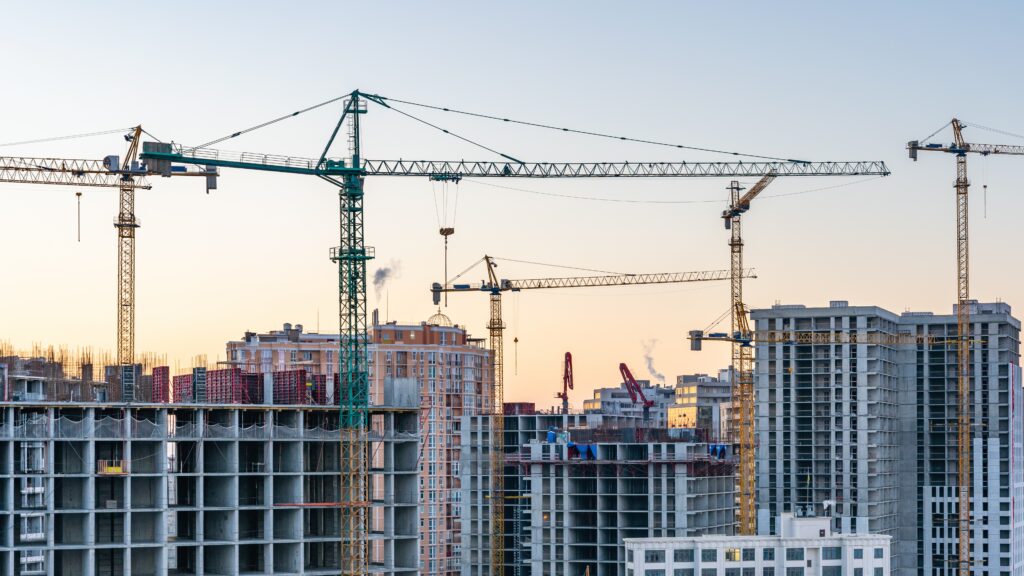
According to the Ministry of Land, Infrastructure and Transport's "Key Statistics on the Construction Industry," construction industry bankruptcies have steadily increased over the past two years. This number is expected to increase further. While large corporations are holding on with financial strength and networks, small and medium-sized construction companies are vulnerable to regulatory shocks and financial burdens. Delays in new projects lead to a worsening employment situation, which in turn leads to a contraction in supply.
Ultimately, the real estate market is facing a deepening imbalance, with both a supply shortage and a shrinking demand. However, this crisis could serve as an opportunity for industrial restructuring. While SMEs face significant challenges, there is potential for a new order to emerge through M&A and cooperative models. Short-term imbalances, coupled with long-term supply stabilization policies, could provide an opportunity to restore market balance.
Strategic Implications
Going forward, investors should keep three strategic implications in mind. First, given the high volatility of interest rates, they should manage leverage conservatively and review their holding structure and corporate design in preparation for tax tightening. Second, portfolios should be restructured to prioritize mid- to long-term value preservation over short-term cash flow. Assets with stable rental demand and those adjacent to public and industrial complexes remain viable. Third, areas where government funding is concentrated, such as the Great East Japan Earthquake (GTX), new industry clusters, and social overhead capital (SOC) projects, will present key opportunities for asset revaluation. Ultimately, where government budgets flow will become a strategic anchor for investors.
The Korean commercial real estate market will face the dual pressures of slowing transaction liquidity and leasing market instability between 2025 and 2026. However, not all markets are experiencing a contraction. In fact, areas supported by government fiscal investment are experiencing an opening in buying opportunities. Above all, the key is not wait-and-see approach, but selection. Investors need not avoid uncertainty, but the insight to identify selective opportunities amidst uncertainty.

Lee Myeong-hee, Director of Remax Wide Partners
You can receive more information by searching for "Director Lee Myung-hee" in the Naver search bar and subscribing to her YouTube channel and blog. I'm currently recruiting team members as the Meta Team Leader at Remax Wide Partners.
For team recruitment inquiries, call 02-508-3040 or call 010-5500-3040.
Submit your resume to Skycola55003040@remax.co.kr