One of the most notable issues in the recent real estate market is the land transaction permit system applied to apartments. This system, which was previously applied only for the purpose of preventing speculation on 'land' itself, has been expanded to apartment transactions, and is having a significant impact on both investors and actual users. In this column, we will examine the changes in the system, the ripple effects, and the strategies that investors should consider.
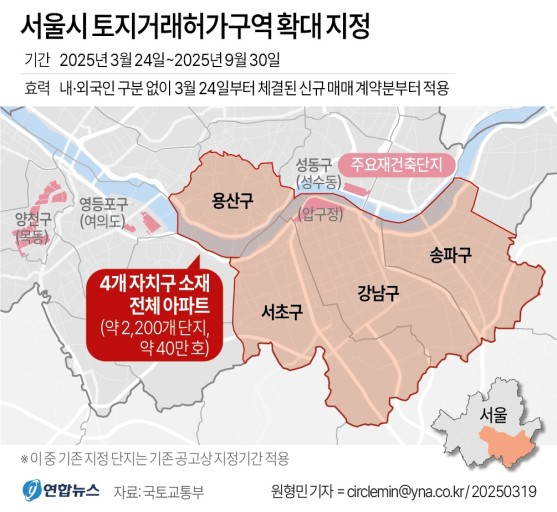
Source: Yonhap News
Why is the land transaction permit system receiving attention again?
The land transaction permit system was originally created to prevent land speculation in areas where large-scale development was planned. However, controversy has arisen as Seoul City recently applied the system to apartment transactions in the three Gangnam districts (Jamsil, Samsung, Daechi, and Cheongdam) and Yongsan-gu.
In February of this year, the permit system for the area was lifted, but it was expanded again just a month later on March 24, causing confusion among investors. The system is structured to block gap investments using jeonse, as it requires actual residence. In addition, this designation is temporary for 6 months, but experts are concerned about the possibility of extension and further expansion of the designated area.
Why is it controversial?
Decreased predictability: The trend of regulations being relaxed and then strengthened again in a short period of time is bound to reduce market confidence. The lack of policy consistency makes investment decisions difficult.
Application method different from the purpose: The restrictions on land transactions are now being applied to apartments, limiting accessibility for residents outside of Seoul. This can also be detrimental to real demanders.
Problems with bulk assignment: Since they are designated as a unit, individual complexes with different real estate values depending on whether there is development potential within the same area are regulated uniformly. This is expected to cause opposition from some owners.
The bubble effect of regulation: Investment demand in areas where the permit system is applied tends to move to neighboring areas. Recently, investment demand has been concentrated in Mapo-gu, Dongjak-gu, Gangdong-gu, etc., and in particular, cases of renewal of reports for large-scale new apartment complexes are increasing.
In addition, there are concerns that regulations limited to apartments will lead to a concentration of investment in areas scheduled for redevelopment, such as townhouses (villas), and that this will also lead to price increases.
What will be the impact on the rental market?
Gap investment restrictions could soon lead to a reduction in the supply of jeonse. As the number of new jeonse properties decreases, the demand for existing jeonse properties may be maintained or even increased, which could put upward pressure on jeonse prices, especially in popular areas such as Gangnam and Yongsan-gu.
What investors should be aware of
Check regulatory areas and permit requirements: Before purchasing, you must thoroughly check with the district office or other sources to see if the area is subject to the land transaction permit system.
Consider a corporate acquisition strategy: Purchases in the form of corporations may be exceptionally permitted, but this may vary depending on local government judgment, so prior consultation is required.
Professional advice required: You should consult with an expert in advance about the permit application process and requirements to avoid delays or contractual disadvantages.
Real estate regulations, which are difficult to predict, have a significant impact on the entire market, and investors have become in a time when clear strategies and risk management are essential. The land transaction permit system is also an important time to accurately understand the direction and flow of regulations and make rational investment decisions.
Reading market trends and making wise decisions requires a strategic approach based on an understanding of relevant institutions as well as advice from trusted experts.
Especially if you receive advice from experienced real estate professionals like Remax, it will be of great help in establishing a more stable and reasonable investment strategy.
In the future, Remax will continue to strive to provide better real estate investment directions based on accurate analysis of market trends and reliable information.